

BrianKrebs
New Member
- Joined
- Oct 31, 2015
- Messages
- 431
- Reaction score
- 14
A bill introduced in the U.S. House of Representatives on Wednesday targets “swatting,” an increasingly common and costly hoax in which perpetrators spoof a communication to authorities about a hostage situation or other violent crime in progress in the hopes of tricking police into responding at a particular address with deadly force.

The Interstate Swatting Hoax Act of 2015, introduced by Rep. Katherine Clark (D-Mass.) and Rep. Patrick Meehan (R-PA), targets what its proponents call a loophole in current law. “While federal law prohibits using the telecommunications system to falsely report a bomb threat hoax or terrorist attack, falsely reporting other emergency situations is not currently prohibited,” reads a joint statement by the House co-sponsors.
To address this shortcoming, the bill “would close this loophole by prohibiting the use of the internet telecommunications system to knowingly transmit false information with the intent to cause an emergency law enforcement response.”
“In recent years, swatting has become a widely used tool for online harassers to attack journalists, academics, domestic violence survivors, and celebrities,” the lawmakers wrote. “Perpetrators locate victims’ private information online and use technology to conceal their identity as they contact emergency responders.”
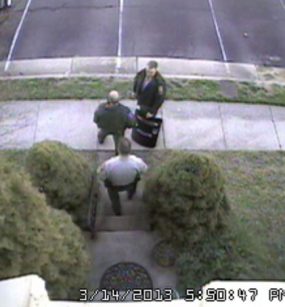
Fairfax County Police outside my home on 3/14/13
As the target and victim of multiple swatting hoaxes, I support efforts to crack down on this dangerous crime, which wastes public resources, unnecessarily endangers lives, and diverts first responders away from real emergencies.
However, the bill doesn’t and can’t address a big part of the swatting problem: A huge percentage of those involved in swatting are under the age of 18, and the federal justice system simply isn’t built to handle juvenile offenders. As a result, most cases of youths detained for swatting are handled by state and local authorities. Thus, unless more states pass anti-swatting laws, many of these crimes likely will continue to go unpunished.
California, for example, has a law on the books that requires convicted swatters to repay any costs associated with the incident, which can range as high as $10,000. Under the California law, which took effect Jan. 1, 2014, convicted swatters can face up to a year in jail.
Continue reading...
The Interstate Swatting Hoax Act of 2015, introduced by Rep. Katherine Clark (D-Mass.) and Rep. Patrick Meehan (R-PA), targets what its proponents call a loophole in current law. “While federal law prohibits using the telecommunications system to falsely report a bomb threat hoax or terrorist attack, falsely reporting other emergency situations is not currently prohibited,” reads a joint statement by the House co-sponsors.
To address this shortcoming, the bill “would close this loophole by prohibiting the use of the internet telecommunications system to knowingly transmit false information with the intent to cause an emergency law enforcement response.”
“In recent years, swatting has become a widely used tool for online harassers to attack journalists, academics, domestic violence survivors, and celebrities,” the lawmakers wrote. “Perpetrators locate victims’ private information online and use technology to conceal their identity as they contact emergency responders.”
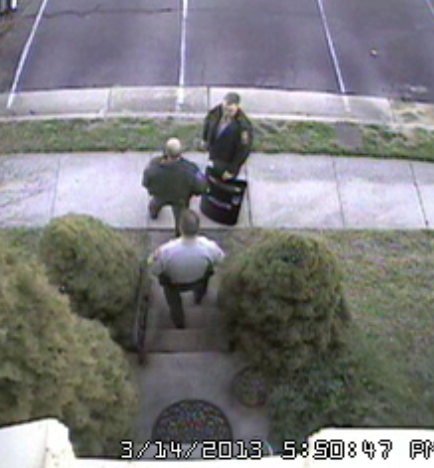
Fairfax County Police outside my home on 3/14/13
As the target and victim of multiple swatting hoaxes, I support efforts to crack down on this dangerous crime, which wastes public resources, unnecessarily endangers lives, and diverts first responders away from real emergencies.
However, the bill doesn’t and can’t address a big part of the swatting problem: A huge percentage of those involved in swatting are under the age of 18, and the federal justice system simply isn’t built to handle juvenile offenders. As a result, most cases of youths detained for swatting are handled by state and local authorities. Thus, unless more states pass anti-swatting laws, many of these crimes likely will continue to go unpunished.
California, for example, has a law on the books that requires convicted swatters to repay any costs associated with the incident, which can range as high as $10,000. Under the California law, which took effect Jan. 1, 2014, convicted swatters can face up to a year in jail.
Continue reading...


 Phone System